
Social Media Size Calculator
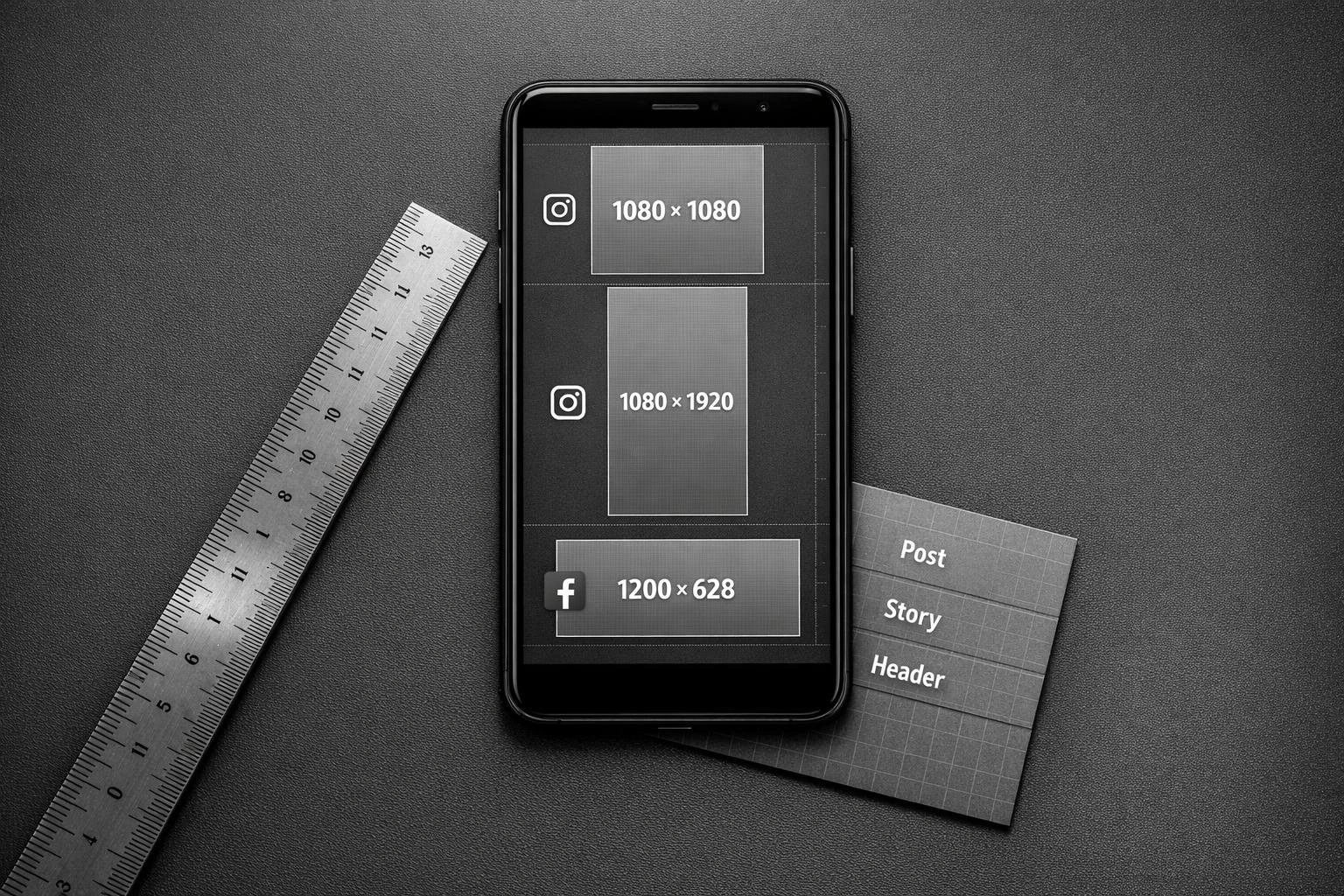
In the world of social media, first impressions count – and they begin with your images. Whether you are designing a post for Instagram, uploading a cover image to Facebook or sharing a story on Pinterest: the right dimensions are critical so your content does not appear cropped or distorted.
Why image dimensions matter
Every platform has its own rules. A square image that looks perfect on Instagram can look completely wrong on X (Twitter). If you do not know the specifications, you risk blurry rendering or important details simply disappearing.
The most important formats at a glance
| Platform | Content type | Dimensions | Aspect ratio |
|---|---|---|---|
| Post (feed) | 1080 × 1080 px | 1:1 | |
| Post (portrait) | 1080 × 1350 px | 4:5 | |
| Story / Reels | 1080 × 1920 px | 9:16 | |
| Post | 1200 × 630 px | 1.91:1 | |
| Story | 1080 × 1920 px | 9:16 | |
| Post | 1200 × 627 px | 1.91:1 | |
| Twitter/X | Post | 1200 × 675 px | 16:9 |
| Pin | 1000 × 1500 px | 2:3 |
Instagram is currently introducing the 3:4 format (1080 × 1440 px) to improve display on modern smartphone screens. For Stories and Reels, 9:16 (1080 × 1920 px) remains the standard.
Maximum file size: 8 MB for images. Recommended formats: JPG and PNG.
For Facebook posts, a resolution of 1200 × 630 px is recommended. The cover image should be 820 × 312 px (desktop). Stories use the vertical 9:16 format.
On LinkedIn, high-quality, informative images perform best. The recommended format for posts is 1200 × 627 px. The profile background image should be 1584 × 396 px.
Recommended file formats
JPG is suitable for photos, as it keeps the file size small without losing much quality. PNG is ideal for graphics with a transparent background, such as logos. For animations, use GIF or animated WebP files.
Tips for optimal results
- Produce at high resolution (at least 1080 px wide)
- Place important content in the centre of the image (safe zones)
- Always observe file sizes and platform limits
- Test on different devices before publishing
Our recommendation: create templates in the most common formats and adapt them for each platform. This saves time and ensures a consistent brand presence.