
How Brand Guidelines Ensure Consistency
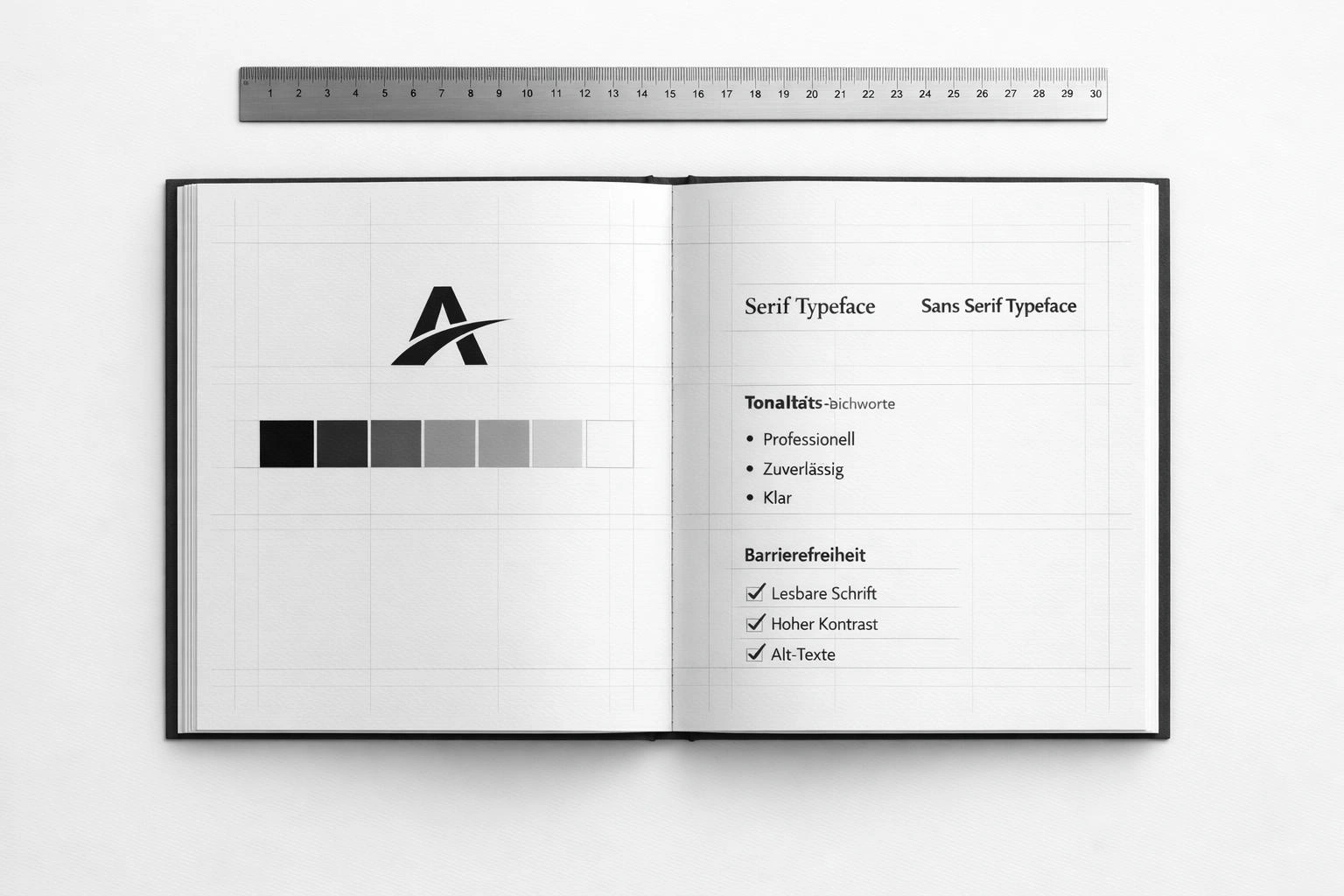
Brand guidelines are indispensable for maintaining a cohesive and professional brand presence. They help companies shape their visual and verbal elements consistently, strengthening trust and recognition among customers. Without clear rules, inconsistency, higher costs and an unprofessional impression are the likely outcome.
Key facts
- 80% faster recognition through consistent brand management.
- 20–30% higher product value when the brand is clearly defined.
- Companies without clear guidelines pay 40% more for customer acquisition.
- Consistency increases revenue by up to 23%.
What brand guidelines cover
- Logo usage: Guidelines on size, proportions and colours.
- Colour palette: Defined primary and secondary colours for digital and printed media.
- Typography: Consistent typefaces and text alignments.
- Imagery: Clear guidelines on motifs, perspectives and style.
- Tone of voice: Consistent communication style and brand personality.
Step 1: Define the core elements
Logo guidelines should contain clear rules on minimum sizes, proportions and white space to ensure legibility and visibility. It is worth specifying different logo variants – such as inverted, full-colour or black-and-white versions – for use on different backgrounds.
The colour palette should include primary and secondary colours along with their exact colour codes for digital (HEX, RGB) and printed applications (CMYK, Pantone).
Step 2: Establish clear usage rules
Visual comparisons are an effective means of illustrating correct and incorrect applications. A “Do and Don’t” block might show the correctly placed logo alongside a distorted version.
“These guidelines must be adhered to in any form of communication, so that the sender – the brand – always remains clearly recognizable.”
Accessibility is also central: normal text requires a contrast ratio of at least 4.5:1. In Germany, 9.4% of the population have a severe disability, and 71% of users with disabilities leave a website immediately if it is not accessible.
Step 3: Distribute and train the team
Modern web solutions with search functions, design plugins and automatic updates are replacing static PDFs. Software plugins that integrate directly into tools like Figma or Adobe Creative Cloud make access easier.
Training measures such as workshops, one-to-one conversations and regular update meetings ensure that the guidelines are not only known, but internalised.
Step 4: Update and monitor
Brands evolve, and market conditions are constantly changing. A clearly defined review process is the key to keeping guidelines current and useful. Plan fixed review cycles – annually, for example.
Benefits of consistent brand implementation
Studies show that a consistent brand presence can increase revenue by up to 23%, while consistent brand messaging leads to revenue increases of between 10% and 20%.
Consistent colour use alone can increase brand perception by up to 80%.
Conclusion
Brand guidelines are far more than a simple document – they form the foundation for successful and consistent brand communication. While 94% of companies have established such guidelines, only 30% apply them consistently.
“A brand guidelines document should form the cornerstone of your content creation process.”