
Consistent Branding Across Web, App and Social Media
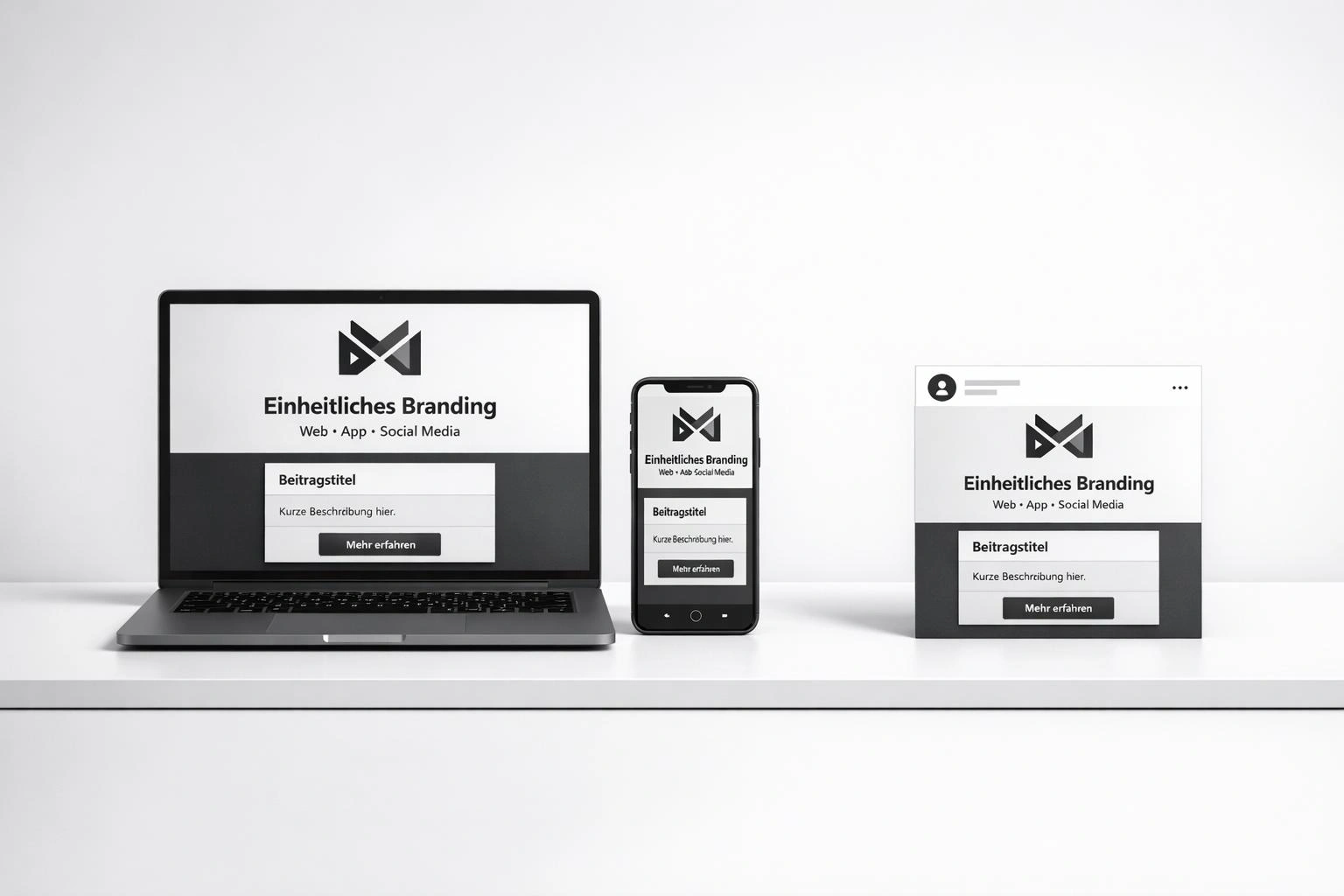
A consistent brand presence is essential for building trust, driving recognition and retaining customers long-term. Studies show that 90% of customers expect a consistent experience across all platforms. Consistent colours can increase brand recognition by up to 80%, and consistent messaging can raise revenue by 10–20%.
Core elements of brand identity
A consistent brand presence is defined by several central elements:
- Logo: Different variants for different usage contexts (primary version, favicon, social media profile picture)
- Colour palette: Precise colour codes in HEX/RGB for digital and CMYK/Pantone for print
- Typography: Consistent typefaces, font weights and hierarchies
- Imagery: Clear guidelines on motifs, perspectives and style
- Tone of voice: The communication style that reflects the brand personality
Platform-specific branding adaptations
Consistency does not mean everything has to look the same. Each platform has its own requirements:
Website: Responsive layouts with SEO-optimised information architecture. Lossless formats like SVG for crisp rendering. Effective responsive design can reduce bounce rates by up to 40%.
Mobile apps: Native design elements and intuitive user guidance take priority. The app icon must be clearly recognisable at various sizes. Consistent visual design can increase brand perception by 70%.
Social media: Each platform has its own format requirements. While Instagram prioritises aesthetically pleasing content, TikTok calls for a relaxed style, and LinkedIn requires a more professional approach.
Building a design system
Following platform-specific adaptation, the design system serves as the central connection that brings all brand elements together technically. It encompasses reusable components and centralised asset libraries.
A design system goes beyond a classic style guide by offering not only visual guidelines but also technical specifications and reusable building blocks.
Design tokens control colours, spacing and font sizes, enabling system-wide updates to ensure consistency across different codebases.
Managing brand assets
A central asset library enables efficient access to logos, icons, images and templates. Version control is a key factor: every asset version should carry a date and version number to avoid using outdated files.
Conclusion
Consistent branding is the key to trust, recognition and long-term customer retention. The central measures: define the core identity of your brand, develop a comprehensive brand guide, manage your brand assets centrally, and conduct regular audits.
“Visual consistency is not a constraint – it is a strategic tool.”